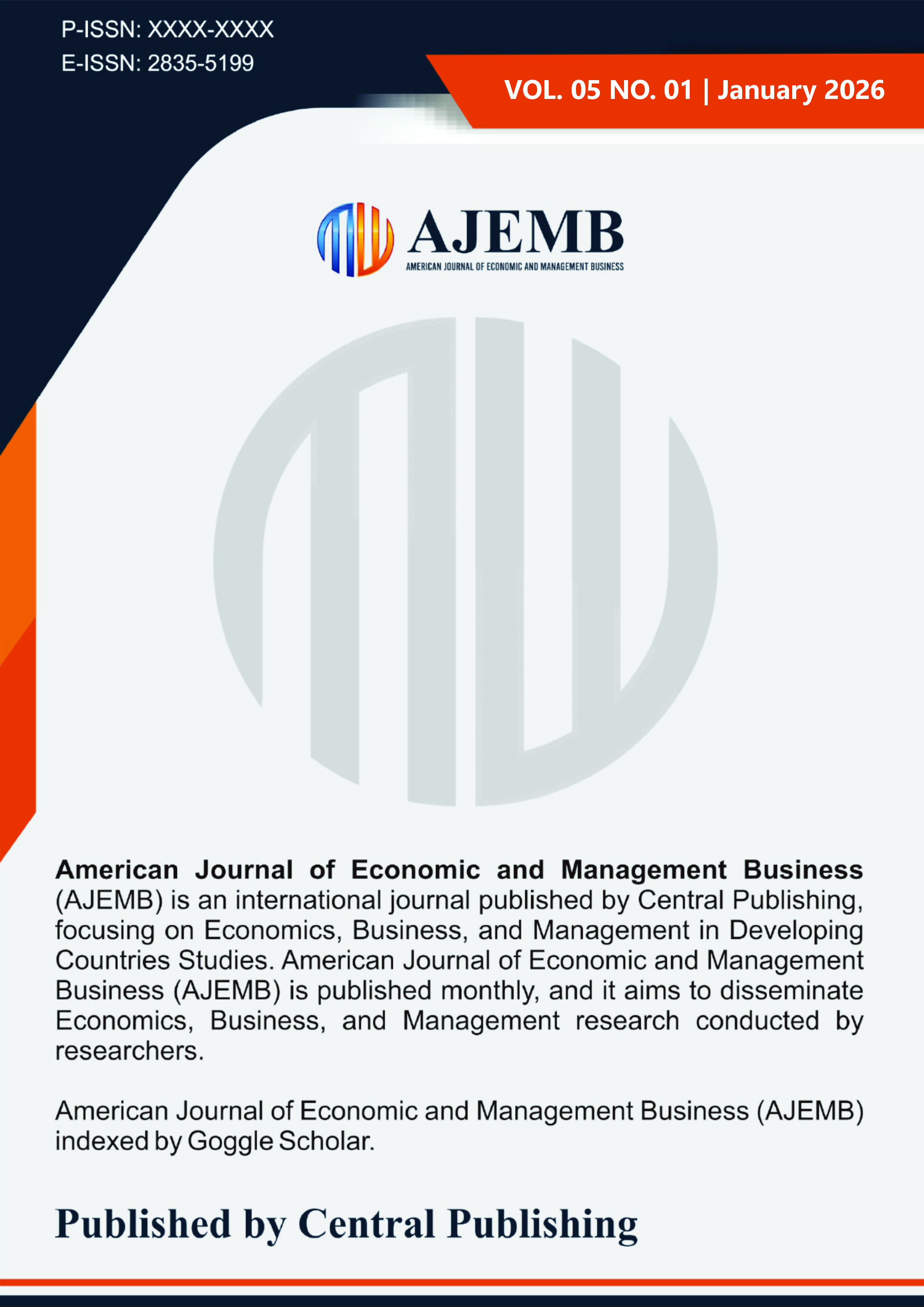
The Influence of Professional Code of Ethics, Independence, and Auditor Accountability on Audit Quality with Professional Skepticism as a Moderating Variable
DOI:
https://doi.org/10.58631/ajemb.v5i1.395Keywords:
professional code of ethics, independence, auditor accountability, professional skepticism, audit qualityAbstract
This study aims to analyze the influence of professional code of ethics, independence, and auditor accountability on audit quality, as well as to examine the role of professional skepticism as a moderating variable. The research background is based on the importance of auditors' professional behavior in ensuring audit quality amid the increasing complexity of financial statements and the pressures of the audit environment. This study uses a quantitative approach with a survey method through questionnaires distributed to auditors working at Public Accounting Firms in South Jakarta. The data were analyzed using Structural Equation Modeling-PLS (SmartPLS). The results of the study show that professional code of ethics, independence, accountability, and professional skepticism have a significant effect on audit quality. In addition, the findings also show that professional skepticism positively moderates the relationships between accountability, independence, and professional code of ethics on audit quality. Such moderation reinforces the influence of the independent variables, which means that the application of ethics, independent attitudes, and auditors' sense of responsibility will have a more optimal impact when auditors have a high level of skepticism. This study confirms that the combination of ethical aspects, professional behavior, independence, and skepticism are important factors in forming reliable audit quality. These findings provide implications for Public Accounting Firms to strengthen ethics training, independence policies, and the development of professional skepticism as part of efforts to improve audit quality.
Downloads
Published
Issue
Section
License
Copyright (c) 2026 Alfatah Hakim, F.X. Kurniawan Tjakrawala

This work is licensed under a Creative Commons Attribution-ShareAlike 4.0 International License.